AI made content creation instant. But every visitor still reads the same static page. Content Modes is a drop-in widget that transforms any marketing page into an adaptive experience — matching how each person actually wants to consume information.
Adobe Brand Concierge is an enterprise-grade agentic AI platform that enables organizations to deploy multiple specialized AI agents capable of orchestrating intelligent, on-brand conversations at scale. By combining advanced natural language understanding with your brand's unique voice and knowledge base, Brand Concierge delivers personalized, contextually aware interactions across every touchpoint in the customer journey — from initial awareness through post-purchase support and loyalty.
Marketers now use AI to generate landing pages, product descriptions, and campaigns at unprecedented speed. But how that content reaches readers hasn't changed at all.
Every visitor gets the same wall of text — whether they're a 60-second skimmer, a deep researcher, an audio learner, or someone who thinks visually. The content doesn't adapt. The reader has to.
A visitor clicks a mode toggle. The entire page re-renders to match. No reload. No new URL. The same content — instantly transformed by LLM into the format they prefer.
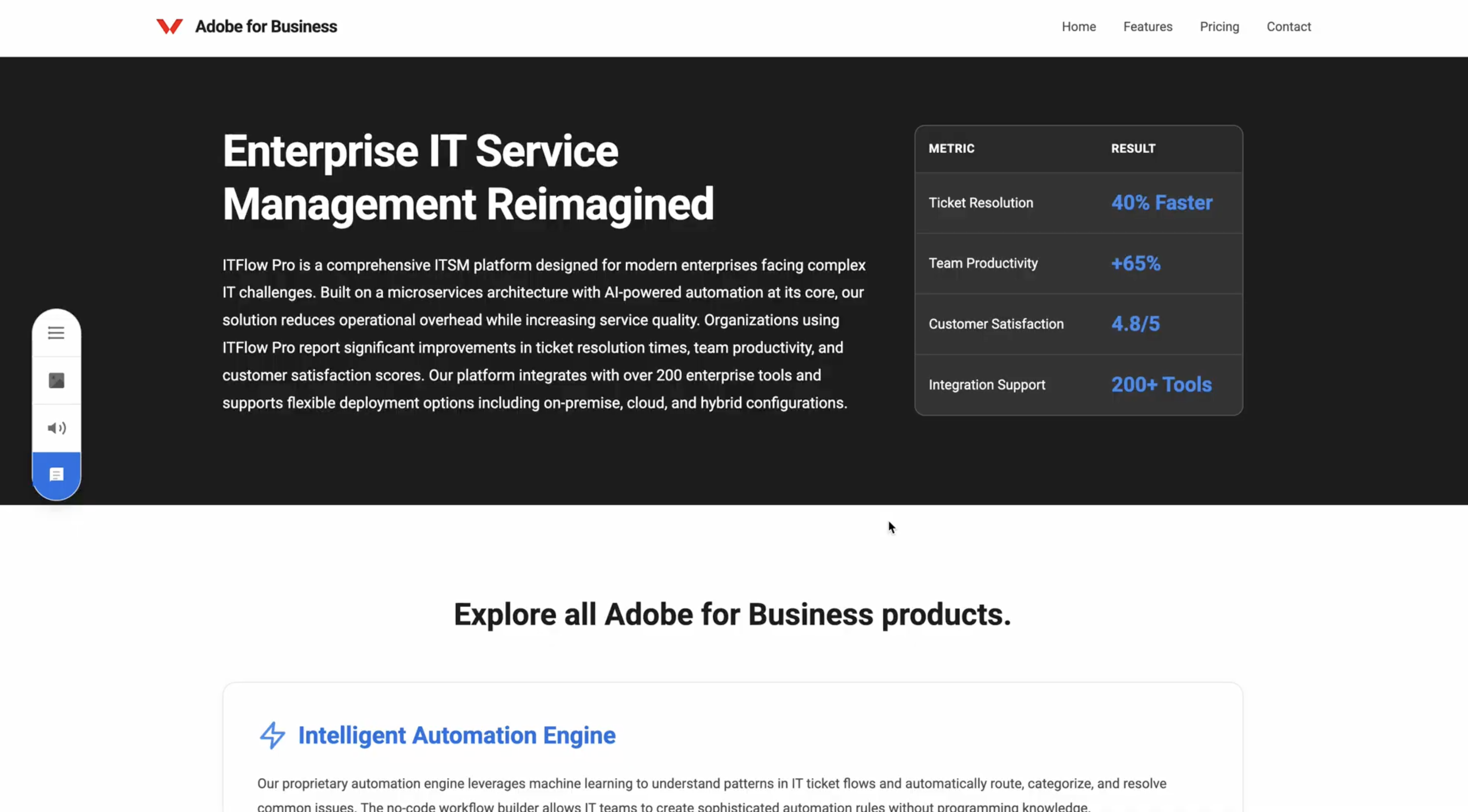
The original, fully-detailed content — every context point, every nuance, every supporting argument. For visitors who want to understand everything before making a decision.
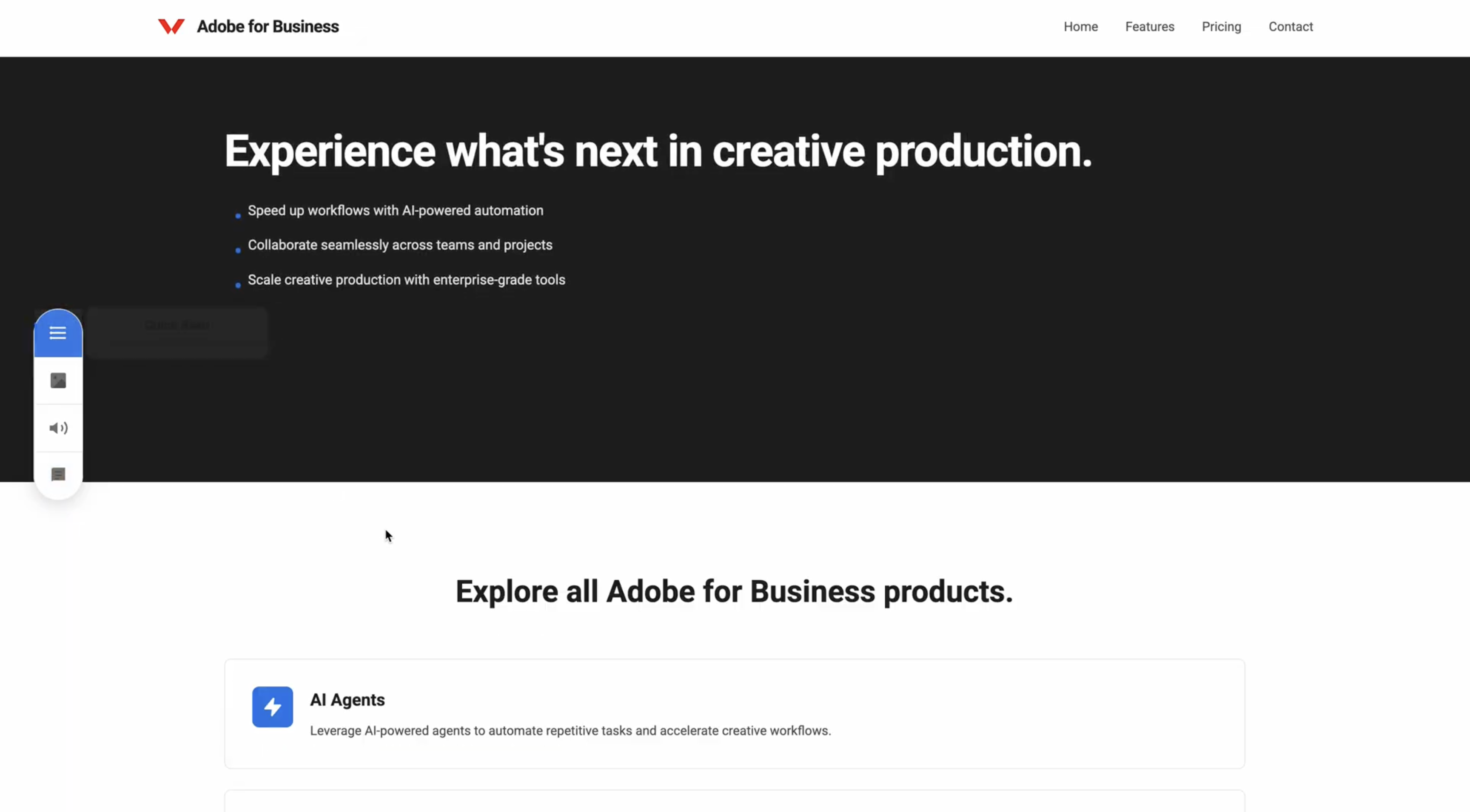
LLM-condensed version — distilled to the essential facts in scannable bullets or short punchy sentences. For the visitor who has 30 seconds and wants the signal, not the noise.
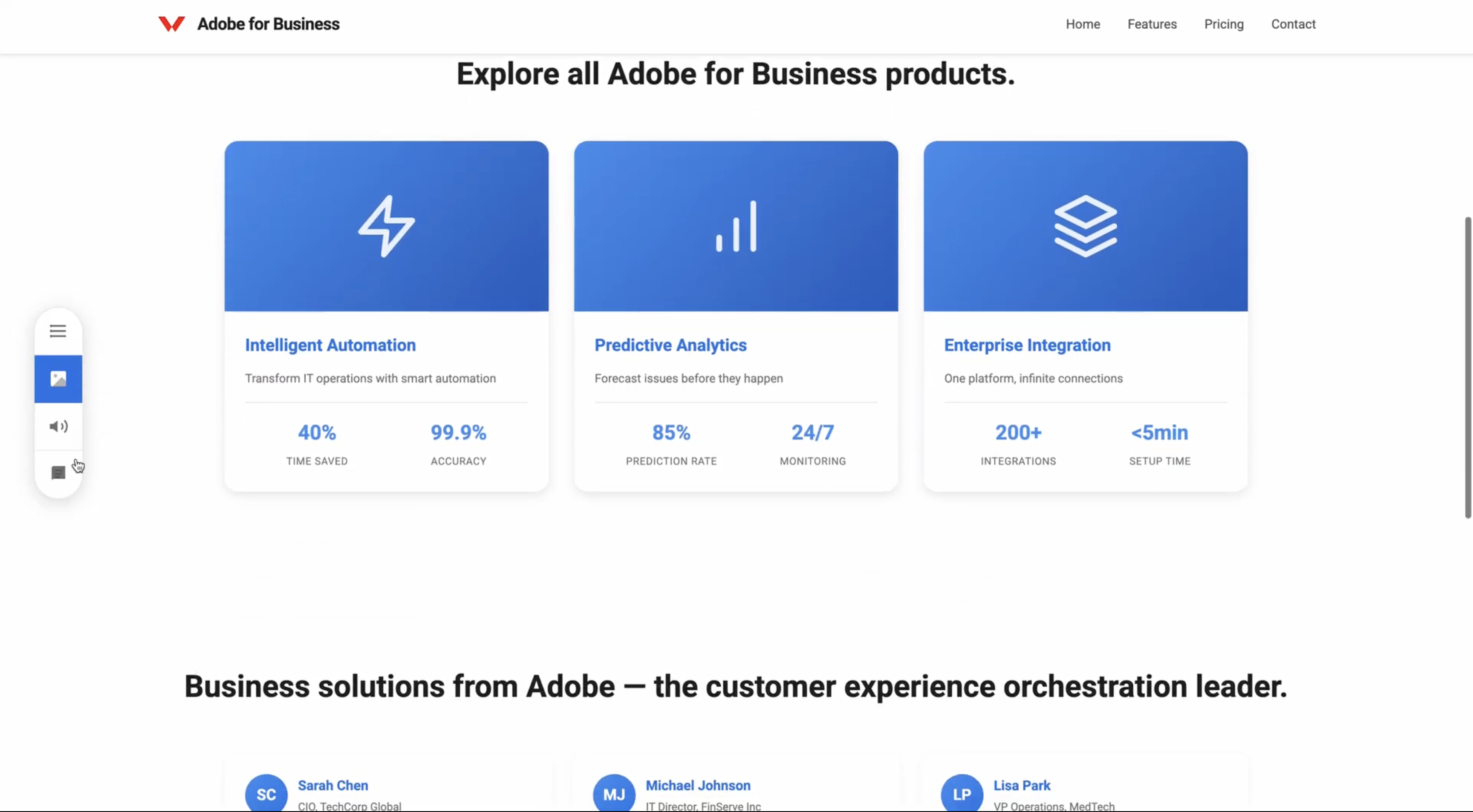
Content restructured for visual thinkers — key concepts as labeled callouts, stats as visual elements, and flow presented spatially rather than linearly.
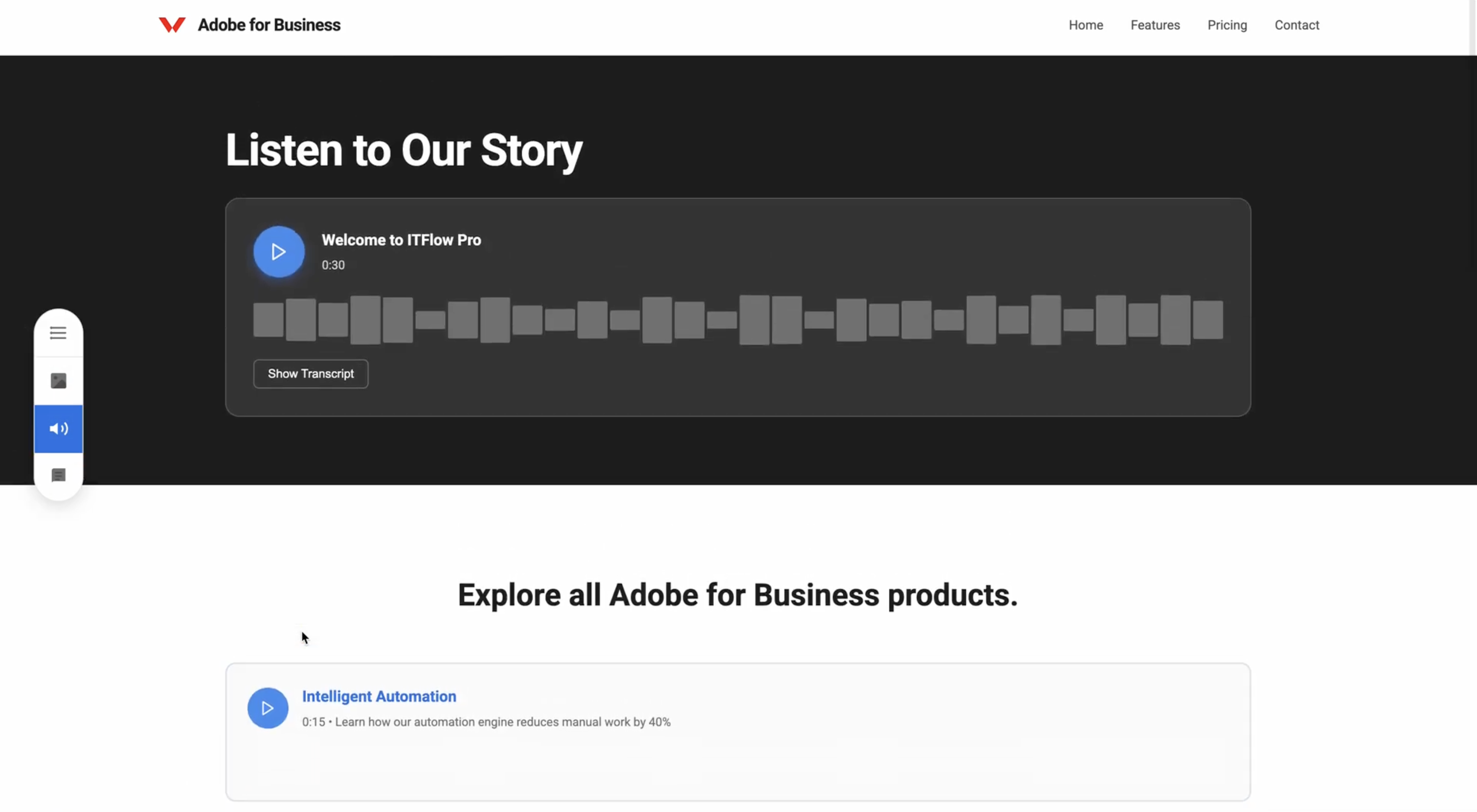
Content converted to a naturally spoken script and narrated via TTS. Commuters, multitaskers, and audio learners can consume a full product page without reading a word.
No redesign needed. The widget wraps existing content, sends it to the LLM on mode switch, and replaces the DOM — all client-side.
One script tag. The widget identifies content blocks on your page automatically using semantic HTML selectors.
A minimal floating toolbar lets visitors choose their preferred format. First visit defaults to Verbose. Returning visitors get their last mode instantly.
The selected mode triggers an LLM call with the page content. The response replaces the existing DOM. Transformations are cached per session.
Mode preference is stored and synced to the user's profile (via CDP/identity resolution). Future visits — across your entire site — default to their mode.
Today, personalization means showing different content to different people. Content Modes goes one level deeper — same content, adapted to how each person processes information.
Segment users. Show different headlines, offers, or pages based on firmographics and behavior. The format stays the same — a static webpage.
Same content — but delivered as a deep read, a 10-second scan, a visual diagram, or a 2-minute audio brief. Meet every cognitive style, not just every segment.
One marketing page — instantly transformed by LLM into four distinct reading experiences. The widget sits on top; the content underneath adapts on demand.
Full context, every detail. For buyers who need to understand everything before deciding.
Key points, crisp bullets. For the 30-second skimmer who wants signal, not noise.
Icons, stats, spatial layout. For visual thinkers who process information as images, not text.
Narrated and ready to play. For commuters and multitaskers who listen while they move.
Transforming content on the fly with LLMs sounds elegant until you hit the real edge cases. These are the problems that matter most before this moves beyond prototype.
The LLM condenses or restructures content without knowing what's critical to the brand. Quick Read might strip a key differentiator. Visual mode might misrepresent a statistic. Hallucinations — even minor ones — in a marketing context erode trust fast and create legal exposure.
→ The highest-risk failure mode for the product
If the page DOM is replaced with LLM-generated content on mode switch, what does Google index? Client-side transformations are invisible to crawlers. Server-side rendering or careful caching strategies would be needed to avoid tanking organic rankings for pages that adopt Content Modes.
Mitigation: SSR transformations cached per mode, canonical URL per original
Generic text-to-speech voices mispronounce brand names, technical terms, and product names. "Adobe Experience Manager" becomes a phonetic approximation. For enterprise brands, a robotic or incorrect narration is worse than no audio at all — it signals low quality at the moment of highest intent.
Mitigation: brand-specific pronunciation dictionaries, ElevenLabs or custom voice
The first time a visitor clicks Quick Read, they wait for an LLM round-trip. On a slow connection, that's 2–4 seconds of blank content — exactly when curiosity is highest. If the wait feels longer than just reading the original, users won't switch modes again.
Mitigation: pre-generate all modes on page load in background, show skeleton UI
For finserv, healthcare, or legal marketing pages, every word is reviewed by compliance. An LLM rewriting that content — even to simplify it — creates a version that was never approved. Content Modes would need a human-in-the-loop review step or be excluded from regulated content entirely.
Mitigation: compliance flag per page, human-approved mode variants for regulated content
Before building the full widget, I'd A/B test a single page with manual Quick Read and Verbose variants — no LLM, just two static versions. If the mode with fewer words converts better for some segments, the concept is validated. Then the LLM is just the scale mechanism, not the hypothesis.
→ Prove the format hypothesis before automating it
A live demo showing all four modes transforming a real marketing page in real time.
Watch Demo Video