Aggregating sources and social sharing sounds simple until you hit the real constraints. These are the hard problems that sit underneath the clean UX.
⚠️
The Social Platform Wall
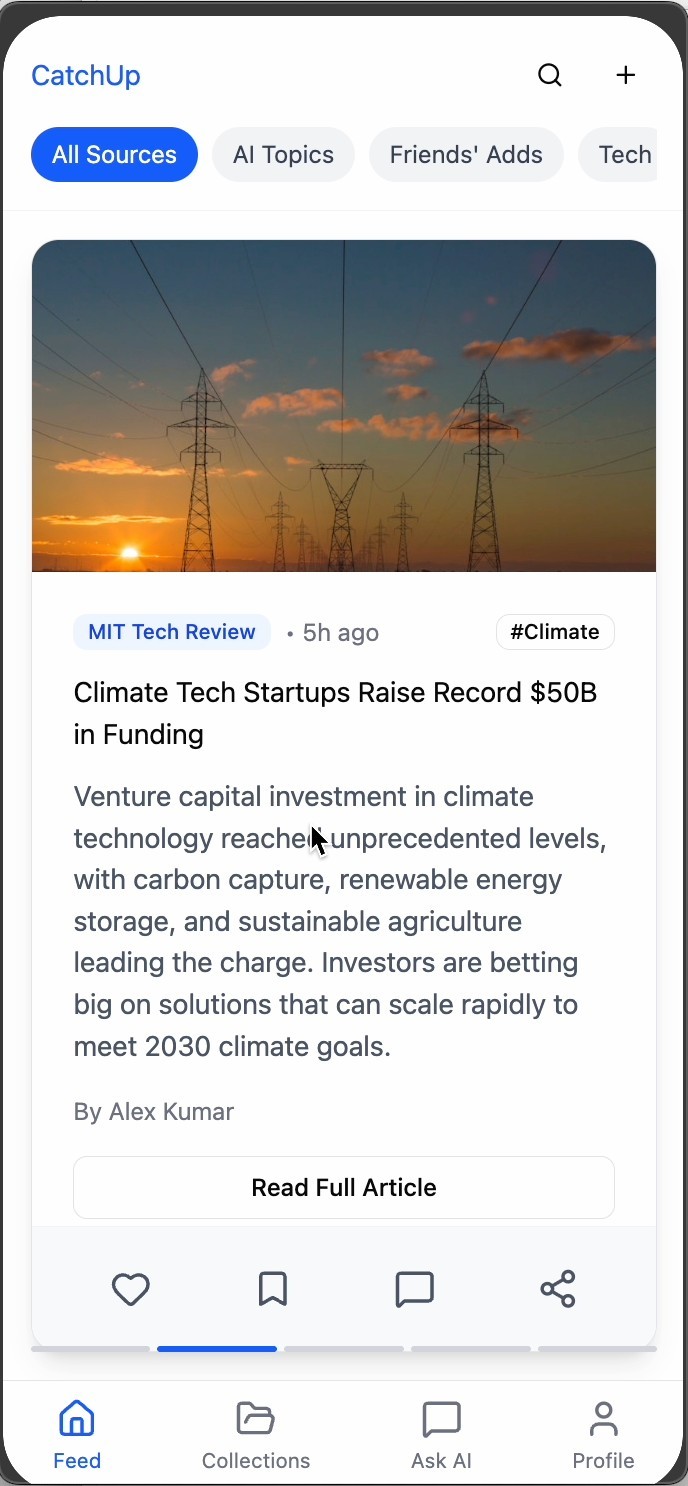
WhatsApp has no public API. Instagram actively blocks scraping. Telegram is more open but still requires workarounds. "Friends' Adds" — the most differentiating feature — is also the hardest to build reliably without platform cooperation or a share extension model.
→ The core technical risk for the product
📊
Feed Fatigue from Over-Aggregation
Adding every source a user follows doesn't reduce noise — it amplifies it. Without smart de-duplication, topic clustering, and read-time estimation, the unified feed can feel more overwhelming than the fragmented experience it was meant to replace.
Mitigation: progressive onboarding, topic limits per source, smart dedup
🧊
Ask AI Cold Start
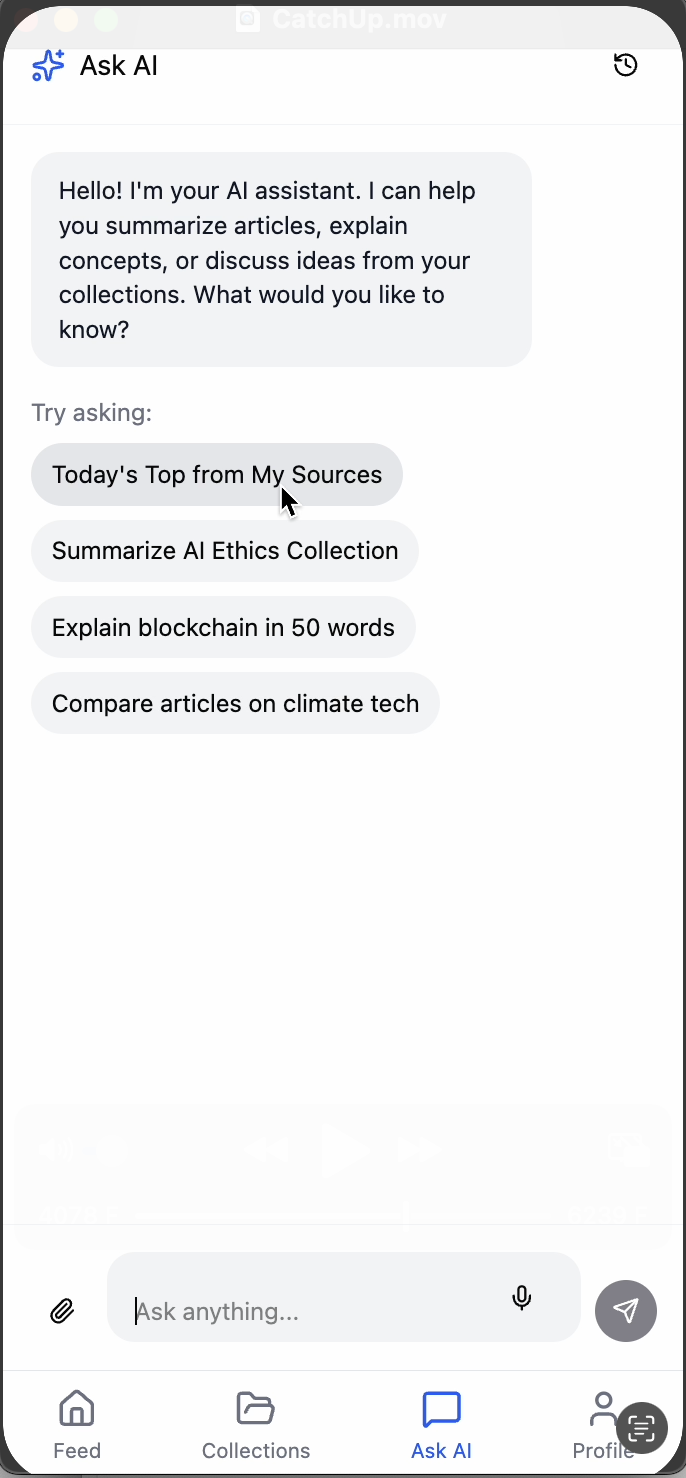
The Ask AI feature is only as useful as the collections a user has built. For new users with empty collections, it has nothing to work with — which is exactly when they're evaluating whether the app is worth keeping. The most powerful feature is invisible at first use.
Mitigation: seed collections from onboarding, demo mode with sample articles
🤝
Network Value Requires Network
The Friends' Adds tab is empty if none of your friends use CatchUp. It's a classic cold-start network problem — the feature that makes the app compelling requires other people to be on it first. Solo users get a good RSS reader; the real value only emerges at 3+ connected friends.
Mitigation: friend invite flow, "import shares" from existing chat history
📖
Swipe Depth vs. Reading Depth
Training users to swipe-to-dismiss is good for engagement metrics but bad for actual reading. A feed designed for speed can inadvertently reward shallow skimming over the deeper engagement with ideas that the app is meant to support.
Mitigation: read-time tracking, "deep read" save mode, weekly reading stats
🧩
What I'd Validate First
Before investing in the social graph, I'd test whether users actually use the Friends' Adds tab or just the personal feed. If 80% of engagement is personal sources, the WhatsApp integration is a nice-to-have — not the core. A simple share link (not a platform integration) might be enough to prove the concept.
→ Measure the tab before building the integration